Four things actually happened in AI yesterday. Each one is explained from scratch, with no assumed background, plus links if you want to go deeper.
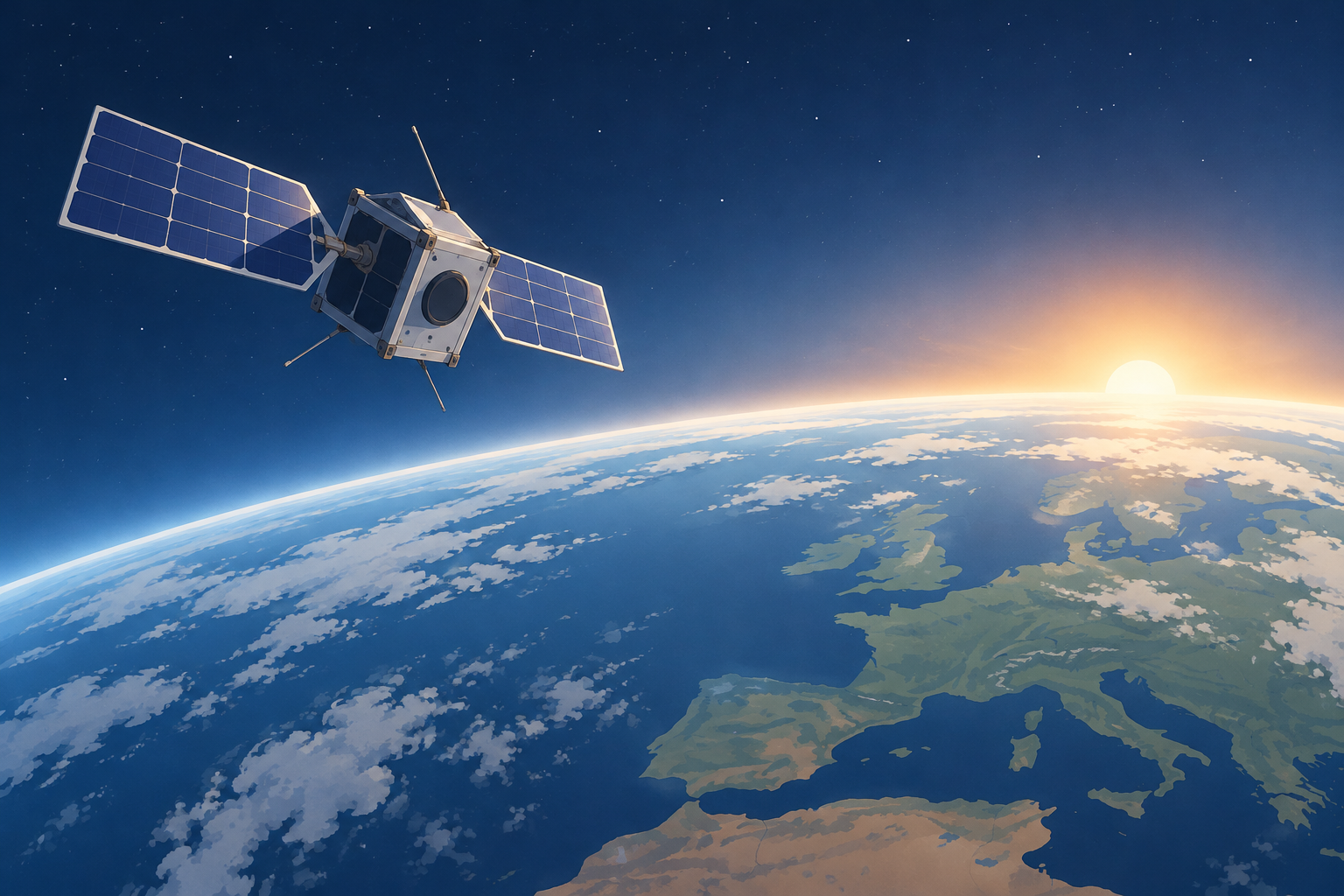
Illustration, not a photo of the actual satellite.
1An AI chip answered from space for the first time
Google launched a small prototype satellite on October 1 carrying its TPU, the custom chip it normally uses in data centers to run AI. This week the team sent a short prompt up to the satellite and got an answer back, a haiku written by Google's open Gemma 4 model as it passed over Norway. Google calls this its "Hello World" moment, the classic first test engineers run to prove a new system works.
Why it matters: data centers on Earth consume huge amounts of electricity and water for cooling. Space offers constant sunlight and no neighbors, so Google is exploring whether AI computing could one day run in orbit. This is still an early experiment. The satellite only worked in short sessions, and the next tests check whether the chips survive heat and radiation. A pair of linked satellites is the goal for 2027.
2Websites get one switch to say “don't train on me”
OpenAI, Google, Microsoft, and Anthropic all agreed to respect a single shared signal that websites can place in their robots.txt file, a small text file sites have used for decades to tell automated visitors (called crawlers) what they may look at. Today a site that doesn't want its content used for AI training has to set separate rules for every AI company. The new shared signal says it once, for all participating companies at once.
Why it matters: AI companies learn from huge amounts of web text, and many publishers say their work is taken without permission or payment. A single standard opt-out is a small but real shift of control back to site owners. It is voluntary, and rollouts are staggered: Anthropic already honors it, OpenAI says "coming months," Google and Microsoft say next year. Meta voiced support but hasn't committed to honoring it.
3China's Kling AI closed a ~$3 billion funding round
Kling is one of the leading AI models that generates video from text, built by Kuaishou, a Chinese short-video company sometimes compared to TikTok. Its parent announced the round has fully closed: investors paid in about 19.8 billion yuan, roughly $3 billion US. Kuaishou keeps about two-thirds ownership and control. The investor list reads like a who's who of Chinese tech, including Alibaba, Tencent, and Baidu, plus a state AI fund. Bloomberg has reported Kling may pursue a stock-market listing as soon as 2027, though the company hasn't confirmed that.
Why it matters: the race to build video-generating AI isn't just OpenAI's Sora and Google. China has heavily funded contenders, and this closing shows investors are still writing very large checks for video AI even after Kling raised $2.8 billion just a few months ago. For you, it means more competition, which usually means faster progress and lower prices.
4OpenAI tightened teen safety and promised public reports
OpenAI announced new protections for users under 18: ChatGPT will further limit practical information about weapons and security systems, get better at predicting when a user is a teen, and in conversations fixated on violence it will be able to end the chat automatically. Repeated terminations can pause the account, with alerts to parents planned for linked teen accounts. OpenAI also committed to publishing a Community Safety Report every six months, starting early 2027.
Why it matters: AI chatbots have faced lawsuits and public pressure over harm to young users. Scheduled public reports and automatic interventions signal safety is becoming an ongoing operational practice rather than a response after something goes wrong. The limits roll out over the coming weeks, so they are promises of behavior, not yet proven results.
OpenAI also published an update on detecting misaligned model behavior, but that was covered in the October 30 briefing, so it isn't repeated here.
All stories verified against original sources on the morning of October 31, 2026. Everything above is from October 30 announcements; rollout promises are not yet delivered features.